

Kangertech
Shop Kangertech Hardware online in Canada.
About
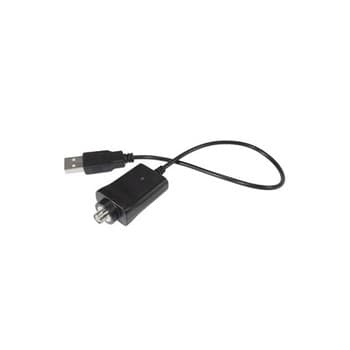
If you've lost or damaged the charger for a battery with a 510 connection, or you want a spare, the Kangertech EVOD 510 USB Charger (4.2V, 400mA) is sold on its own for $4.99. The three figures in its name (510, 4.2V and 400mA) tell you whether it fits. Check them against your battery and its maker's charging instructions before you order.
A charger on its own, for a battery you already have
Our Kangertech range is a single hardware item: the Kangertech EVOD 510 USB Charger (4.2V, 400mA). The listing is for the charger only, with no options or bundles. It isn't a starter kit or a prefilled device, so it's only useful if you already own a battery for it to charge.
That's also why there are no flavours or nicotine strengths to choose here. Nicotine strength belongs to the liquid, not the charger, so the only question is whether the charger fits your battery. For other devices and accessories, see our Hardware category.
What 510, 4.2V and 400mA mean
The 510 tells you whether the charger can connect to your battery. The 4.2V and 400mA tell you whether it charges the way your battery's maker specifies.
The 510 refers to a threaded connection: the screw thread a battery uses to attach to a tank or, in this case, to the charger. The name tells you the charger is made for that connection.
The 4.2V is the charger's output voltage, and 400mA (milliamps) is the charging current, meaning how much current the charger supplies to the battery. Compare both with the charging voltage and current your battery's manufacturer gives. Charge time depends on your battery's capacity as well as the current, so look at your battery maker's guidance for charge times.
Checking the charger against your battery
- Confirm the connection. Your battery needs a 510 threaded connection that screws onto the charger. If it has a different connection, the charger won't fit.
- Compare the figures with your battery maker's instructions. Find the charging voltage and current your battery's manufacturer specifies, compare them with 4.2V and 400mA, and follow the manufacturer's guidance.
- Rule out batteries that charge another way. If your battery charges through a built-in port, or its maker's instructions call for a different voltage or current, follow those instructions and choose a charger that meets them.
A battery can look like an EVOD-style battery and still have different charging requirements. Go by your battery manufacturer's charging instructions, not by how the battery looks.